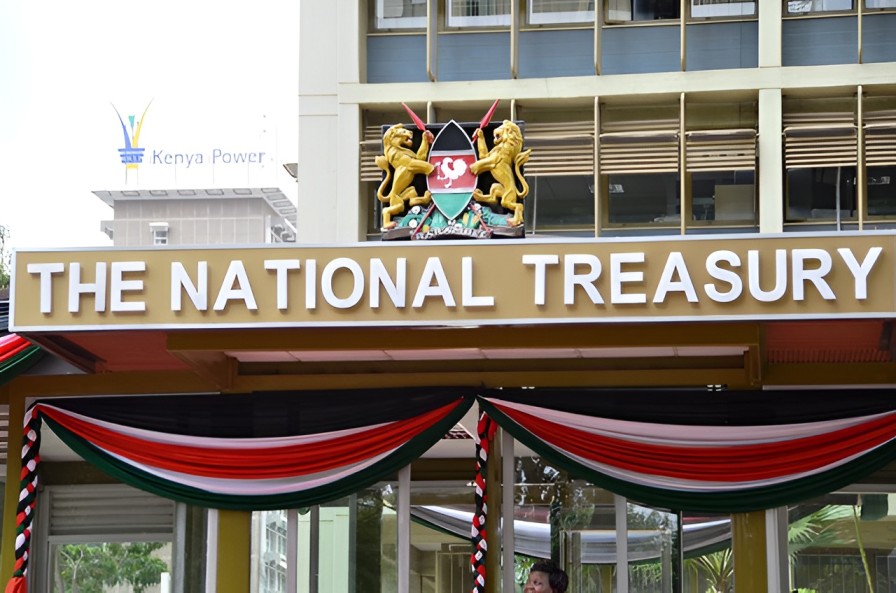
The National Treasury of Kenya on Monday released details on the operationalisation of the Treasury Single Account (TSA) following intervention by the Commission on Administrative Justice.
The information outlines how the TSA will unify government banking, involve national and county entities, and enhance transparency and efficiency. The disclosure comes after Katiba Institute’s information request was delayed in September 2025.
The Katiba Institute’s application sought critical details regarding the structure, personnel, guidelines, and functional operations of the TSA.
It also requested clarification on the relationship between the TSA and the Consolidated Fund, management of Appropriations in Aid (AIA), disbursement procedures under Sections 28(3) and 119(3) of the Public Finance Act, and engagements with county governments on the County Treasury Single Accounts (CTSAs).
Following the Commission’s intervention, which required a seven-day institutional report from the Principal Secretary, the National Treasury provided the requested information.
According to the Treasury, the TSA is a Public Financial Management reform designed to unify government banking operations to enhance cash visibility, efficiency, and transparency.
The rollout will follow a hybrid model over three years across three clusters, national Ministries, Departments, and Agencies (MDAs), county governments, and exchequer-funded State Corporations and Semi-Autonomous Agencies.
MDAs will continue to hold accounts at the Central Bank of Kenya (CBK), while State Corporations will utilise commercial bank accounts linked to the TSA for enhanced visibility.
Daily operations will be managed by the Directorate of Accounting Services and Quality Assurance under the Exchequer Services Division. Oversight will be provided by a Technical Committee comprising the National Treasury, CBK, and the Office of the Controller of Budget.
Key features include invoice twinning, just-in-time funding, expanded overdraft mapping, visibility of commercial bank balances, and mandatory investment of surplus funds in government securities.
The Treasury clarified that depositing funds into the TSA is not equivalent to depositing into the Consolidated Fund.
The TSA acts as a unified structure of government accounts covering all public funds, including special and trust funds unless explicitly exempted.
Meanwhile, most AIA funds, though not deposited into the Consolidated Fund, will be incorporated into the TSA reporting framework to provide a comprehensive view of government liquidity.
Dedicated AIA disbursement processes will preserve transparency, safeguard funds from commingling, and maintain the integrity of the invoice twinning system.
On disbursement under Sections 28(3) and 119(3), the Treasury indicated that funds will continue to follow existing exchequer release processes based on approved budgets and cash flow projections.
The hybrid TSA model aims to reduce idle balances, enable just-in-time payments, improve transparency, and eliminate selective disbursement practices, without disrupting current mechanisms.
The National Treasury also addressed county-level implementation. Counties are required to establish County Treasury Single Accounts mirroring the national hybrid model.
The Treasury is supporting counties by automating the County Revenue Fund withdrawal process through the Controller of Budget, a move expected to harmonise cash management practices, enhance accountability, reduce pending bills, and minimise invoice cherry-picking.
The automation is projected to be completed in the 2025/2026 financial year.
The intervention by the Commission on Administrative Justice reaffirms the importance of transparency and access to information in the management of public finances.
The release of TSA operational details is a key step towards ensuring improved fiscal discipline, real-time visibility of government funds, and efficient utilisation of public resources across both national and county governments.
The Commission’s involvement highlights the role of civil society in holding government agencies accountable, while the Treasury’s disclosure marks a significant milestone in the ongoing reform of Kenya’s public financial management system, aimed at fostering efficiency, accountability, and equitable access to public resources.































Comments
Sign in with Google to comment, reply, and like comments.
Continue with Google